
The Dark Genome and Pathogenic RNA Retroelements
For decades, genomic medicine focused almost exclusively on a tiny sliver of our biology: the 2% of our DNA that codes for proteins. The remaining 98% was casually swept under the rug and labeled "junk DNA."
Today, that dismissive label has been thoroughly debunked. Scientists now refer to this vast, mysterious landscape as the dark genome. Far from being inert molecular garbage, the dark genome is a bustling, tightly regulated underworld filled with non-coding RNAs, regulatory switches, and ancient genetic parasites known as retroelements.
When our cellular defenses are strong, these elements remain locked away. But when they awaken, they can unleash pathogenic RNA and rogue proteins that are increasingly linked to certain diseases such as cancer.
The Hitchhikers in Your Code: What Are Retroelements?
Our genomes are less a pristine blueprint and more an evolutionary archaeological site. Scattered throughout the dark genome are transposable elements (or "jumping genes"), which make up nearly half of all human DNA.
The most notorious among them are retroelements, which move via a "copy-and-paste" mechanism. They are transcribed into an RNA intermediate, reverse-transcribed back into DNA, and pasted into a new location in the genome.
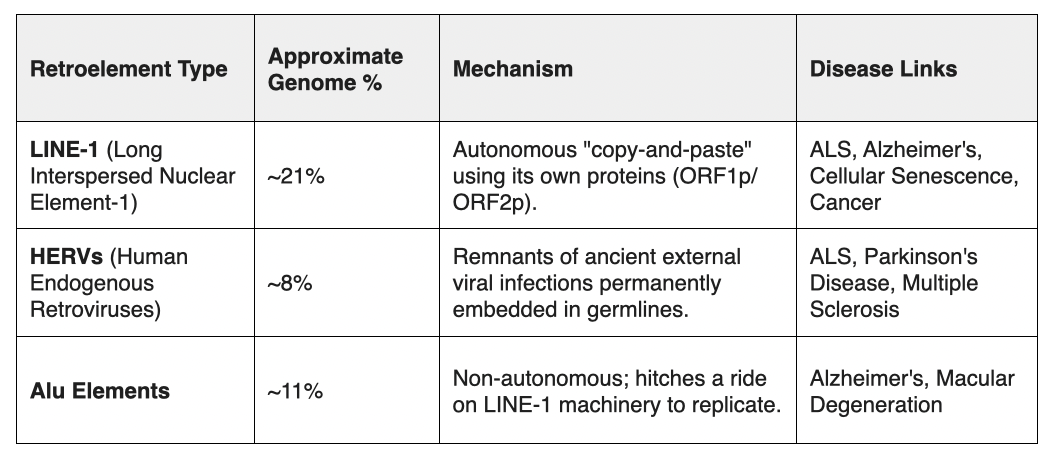
Table 1: Retroelement Families and Their Associated Diseases
When the Guardrails Fail: How Dark RNA Causes Chaos
In healthy, youthful cells, the body keeps retroelements on a strict lockdown. Cells use epigenetic silencing—tightly packing DNA into "closed" chromatin and applying chemical tags like DNA methylation—to ensure these sequences cannot be read or transcribed.
However, as we age, or under severe cellular stress, these epigenetic guardrails begin to fail. The chromatin relaxes, methylation patterns erode, and the dark genome begins to express itself. This de-repression triggers pathology through several distinct pathways:
The Viral Mimicry Trap: When retroelements are transcribed, they often form double-stranded RNA (dsRNA) structures. The cell's innate immune system mistakes this dsRNA for an active, external viral infection. This can trigger a chronic interferon response, causing the cell to inadvertently drive localized inflammation and tissue damage.
Protein Toxicity: Active LINE-1 elements produce specific proteins, like ORF1p and ORF2p. ORF1p acts as an RNA-binding protein that can disrupt normal RNA metabolism, while ORF2p possesses endonuclease and reverse-transcriptase activities that cause genomic instability.
Insertional Mutagenesis: If a retroelement successfully "jumps" and inserts itself into a vital gene, it can physically disrupt cellular wiring, leading to cell death or malignant transformation.
The Disease Connections: From Brains to Tumors
The awakening of pathogenic RNA retroelements is no longer just a theoretical concern; it has been mapped directly to major clinical pathologies.
1. Neurodegenerative Disorders (ALS, Alzheimer's, and Parkinson's)
The brain appears uniquely vulnerable to retroelement awakening. In Amyotrophic Lateral Sclerosis (ALS), researchers have observed an accumulation of LINE-1 and HERV-K RNAs. This buildup is heavily tied to the breakdown of standard RNA-binding proteins like TDP-43. When TDP-43 fails, retroelements exploit the loose chromatin to create toxic stress within motor neurons.
Similarly, research has highlighted significant structural disruptions in the dark genome of Alzheimer's disease brains, pointing to an accumulation of Alu and LINE elements near critical risk genes. In Parkinson's disease, toxic cellular stressors have been shown to rapidly trigger the de-repression of the HERV-K Envelope (Env) gene, severely altering protein homeostasis in dopamine-producing neurons.
2. Oncology and Aging
In cancer, the dark genome acts as a double-edged sword. Malignant cells routinely experience epigenetic chaos, allowing retroelements to run rampant, driving the genomic instability that helps a tumor mutate and escape conventional drugs.
Conversely, this chaotic expression produces unique, non-canonical "dark matter" antigens on the tumor surface. Immunotherapies are being developed to target these specific dark genome footprints, turning a tumor's genomic instability into its own Achilles' heel.
The Therapeutic Frontier: Silencing the Dark Genome
Now that the pathogenic potential of the dark genome is out in the open, biopharma is racing to silence it.
Promising therapeutic angles include Antisense Oligonucleotides (ASOs) explicitly designed to bind and degrade LINE-1 or HERV RNA before they can trigger toxic immune cascades. Other consortia are experimenting with homeoprotein therapies (like Engrailed-1) to restore chromatin locking, as well as specialized vaccines to prime the immune system against HERV-K-expressing cells in conditions like ALS.
By shifting our focus away from traditional proteins and peering into the dark genome, we are finally learning how to quiet the genetic ghosts responsible for our most complex diseases.
References:
https://www.crick.ac.uk/news/2025-10-02_hello-from-the-dark-genome
https://www.alzforum.org/news/research-news/illuminating-new-alzheimers-variants-dark-genome
https://www.biorxiv.org/content/10.64898/2026.02.06.704334v1.full-text
https://targetals.org/news/beyond-junk-dna-targeting-transposable-elements-in-als/